A Second Birthday Together: Saara Donated Stem Cells to Save Her Father
When Saara’s father needed a stem cell transplant, Saara refused to let fear take over. After the donation came a long wait, until the successful transplant finally brought relief to the whole family.
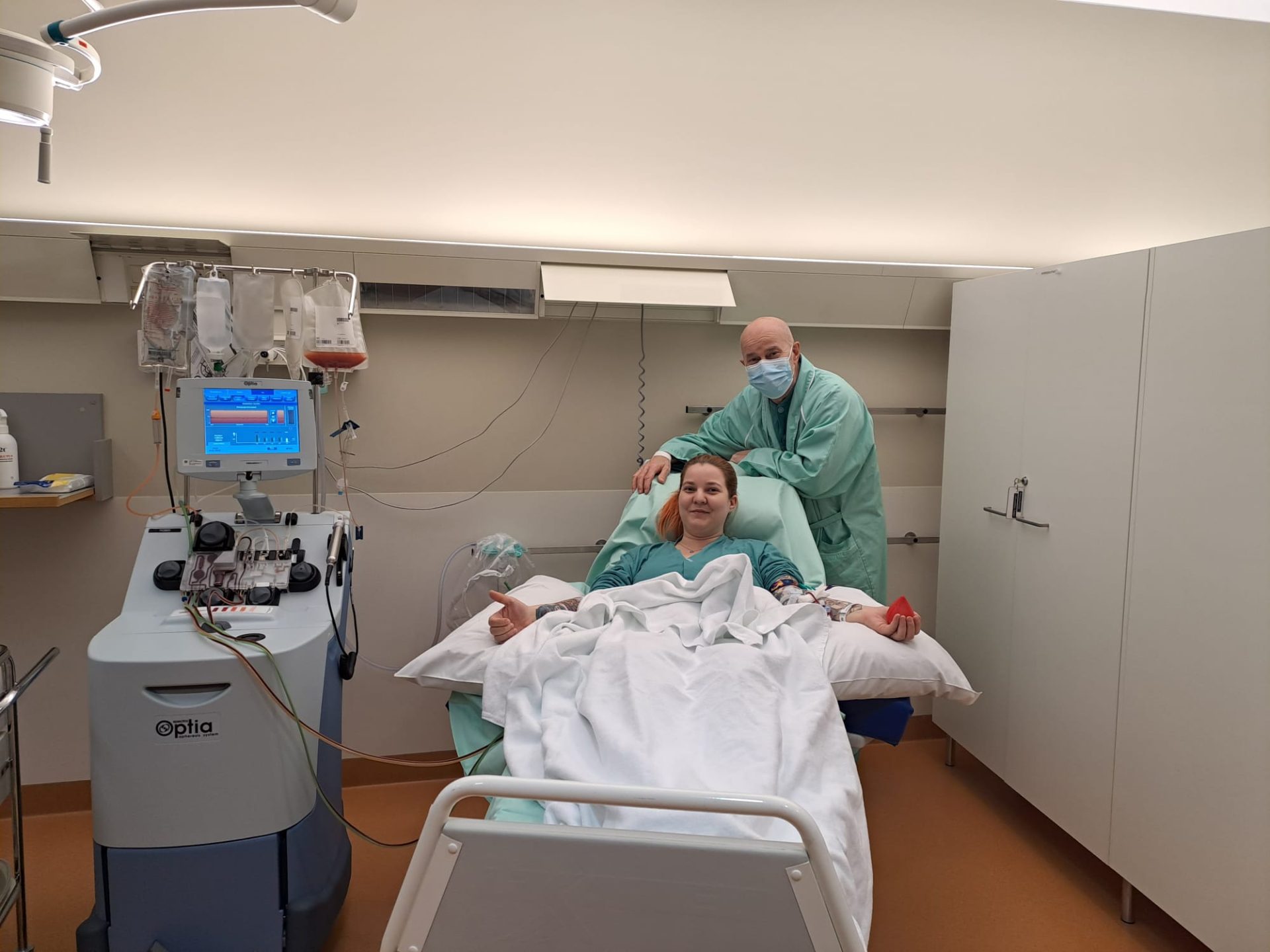
It was winter, and Saara Heikkinen was living an ordinary everyday life. Her days consisted of work, everyday activities with her child, and spending time with friends. Around the same time, Saara’s father, Lassi, was having blood tests in connection with a medical procedure. The tests revealed that his platelet count was low.
Further examinations quickly led to a diagnosis: a rare type of blood cancer called CMML, chronic myelomonocytic leukemia. In this disease, genetic changes occur in the stem cells in the bone marrow, disrupting their normal development into mature blood cells. Problems with blood cell production can lead to anemia, increased susceptibility to infections and a tendency to bleed.
Apart from fatigue, Saara’s father had no other significant symptoms.
– Our whole family was quite shocked by the diagnosis, Saara says.
After the examinations, her father’s condition was monitored for about a year. There is no medication that can cure this form of leukemia, so the progression of the disease was closely monitored. Eventually, a stem cell transplant was chosen as the treatment option because his platelet count did not improve.
A Stem Cell Transplant Ahead
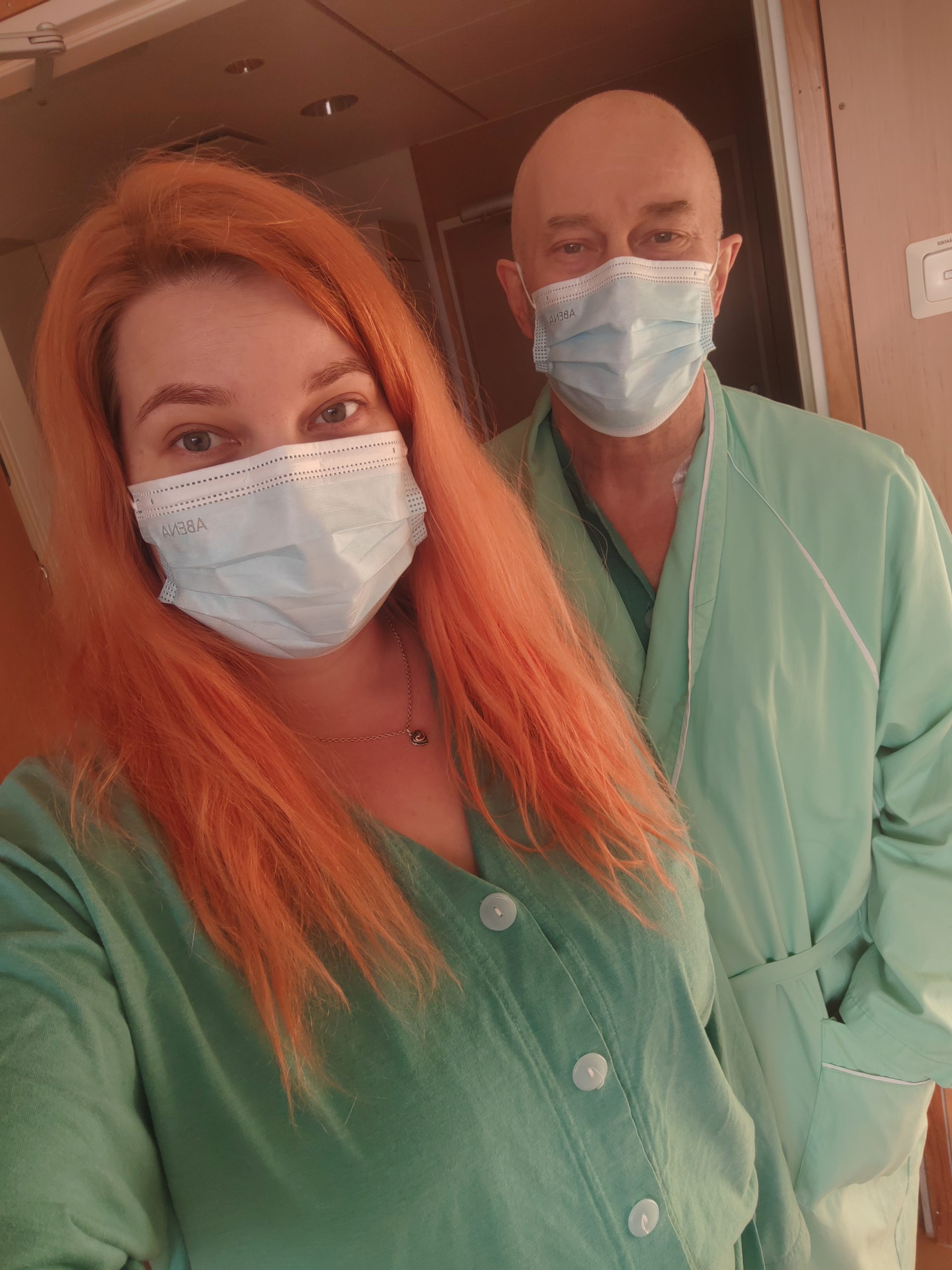
Saara was chosen as the donor
To prepare for the stem cell transplant, Saara’s father’s close relatives were tested to see whether any of them would be a suitable stem cell donor. Saara and her two siblings were tested.
– Somehow, deep down, I knew that I would be a suitable donor. My father and I share the same birthday, Saara says.
After the tests, Saara was found to be the most suitable stem cell donor.
For a month before the transplant, Saara kept a low profile to avoid getting ill before the donation.
– I wasn’t really nervous about the stem cell donation. My attitude was more that I got to donate stem cells. It was something I wanted to do.
Before the donation, Saara received growth factor injections. These increase the number of stem cells and help them move from the bone marrow into the bloodstream. The injections caused her some back pain.
– I wasn’t afraid of the pain because it told me that the stem cells were developing. I was more nervous about whether we would be able to collect enough stem cells during the donation, Saara says.
Spending time together and waiting
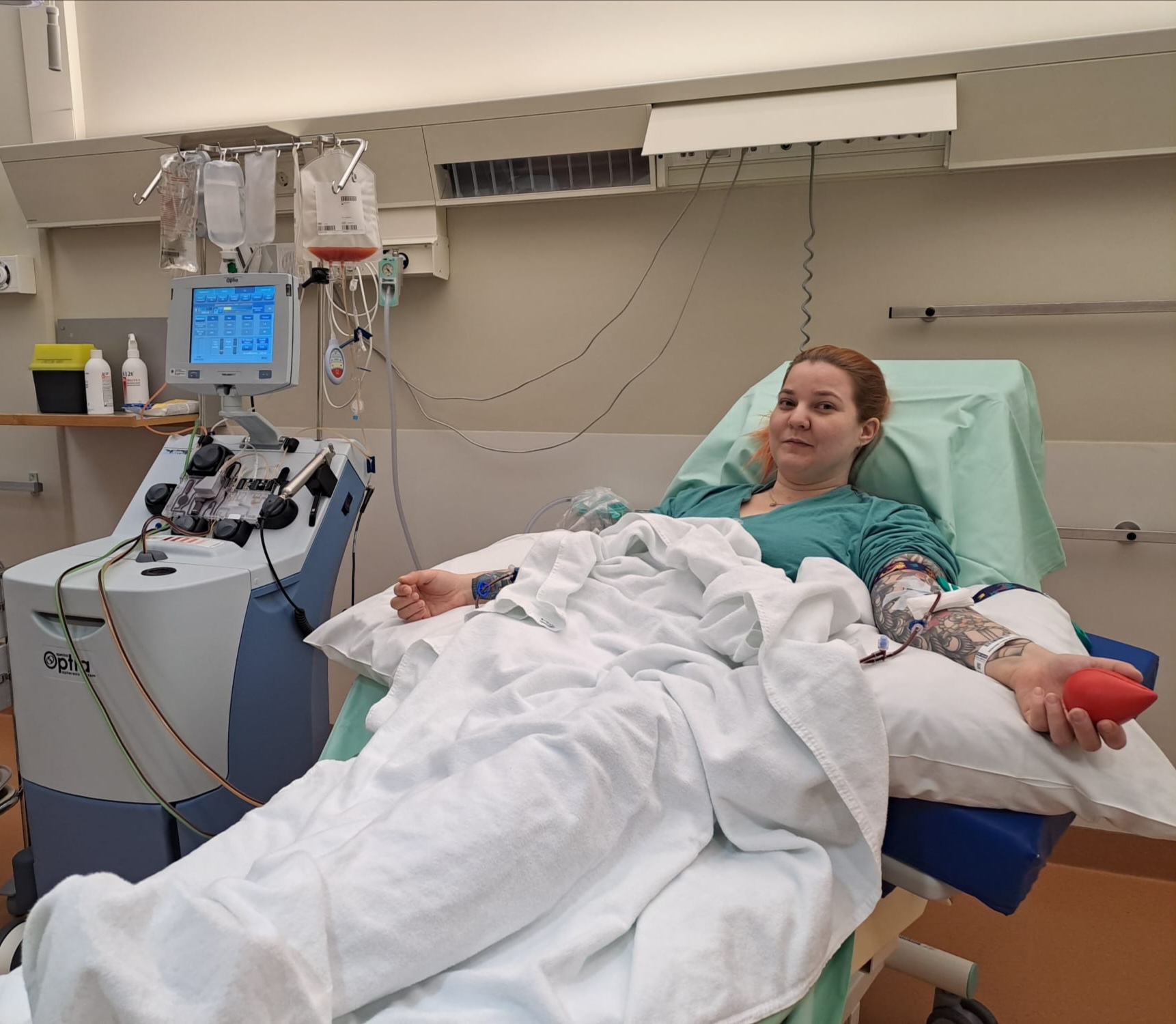
Throughout this experience, I haven’t let fear take over.– Saara Heikkinen
At the moment, Saara’s father is doing well. He cycles, goes for walks and works out at the gym. Lassi is still waiting for his red blood cell levels to improve, and he has experienced mild graft-versus-host disease affecting his skin. His condition is closely monitored, and he regularly undergoes blood tests and bone marrow examinations.
“There’s no need to be afraid of becoming a stem cell donor”
For one in four patients who need a stem cell transplant, a suitable donor can be found among close relatives. If no close relative has a matching tissue type, a voluntary donor is sought through the Stem Cell Registry.
Currently, one in five patients in Finland cannot find the best possible stem cell donor. Saara thinks that is far too many.
– I hope as many people as possible will join the Stem Cell Registry. We were lucky that I was a suitable donor, but not everyone is as fortunate.
The more members there are in the Stem Cell Registry, the better the chances of finding a suitable donor for every patient.
Despite her fear of needles, Saara found the process easy. She also received full support from her workplace for the stem cell donation.
– There’s no need to be afraid of becoming a stem cell donor. By doing this, you can literally save a life.
Today, Saara and her father can once again enjoy everyday life together. They think of the date of the stem cell transplant as their second birthday together.