A serious illness put Jenna’s life on hold, but blood donors helped carry her through treatment
A serious illness made the help of blood donors a very real part of life for 18-year-old Jenna. During her treatment, she needed large amounts of blood products until a suitable stem cell donor was found and her journey towards recovery could begin.
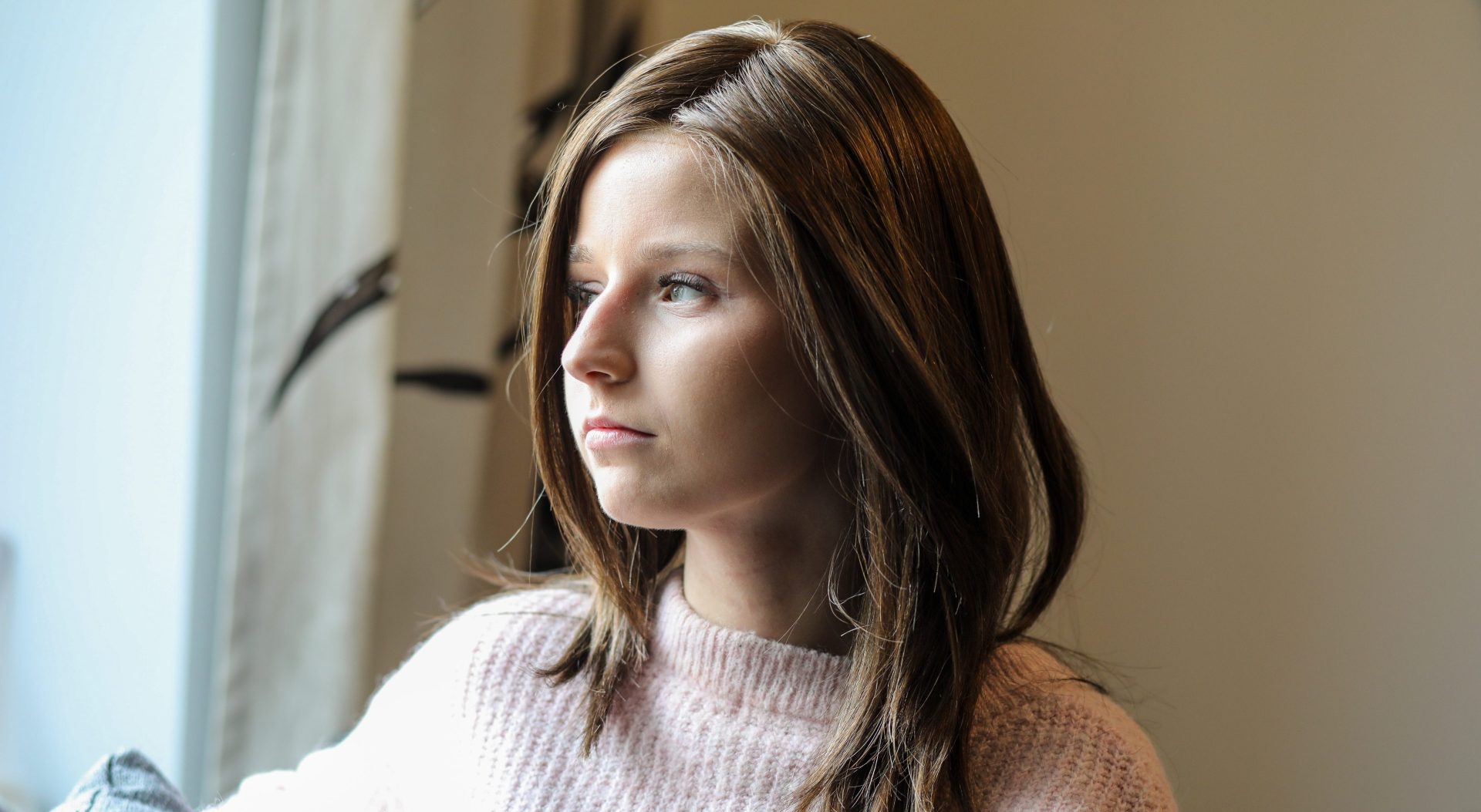
Jenna was just about to graduate from vocational school, and she already had a permanent job lined up. It was winter, and Jenna had recently celebrated her partner’s graduation from upper secondary school.
Around the same time, however, Jenna had been experiencing unusual symptoms. Large bruises had appeared on her elbows and hips. When a blood blister appeared on her lower lip, Jenna went to a health centre and was sent for urgent blood tests.
Later that same day, a nurse called Jenna with the results and told her that she had been referred urgently to the emergency department at Meilahti Hospital.
“I quickly packed my things and went there,” Jenna says.
The blood tests had revealed that Jenna had hardly any white blood cells or platelets left. Because of the risk of infection, she was taken to an isolation room in the emergency department, where doctors carried out further examinations.
Blood products were needed week after week
Jenna was transferred to a hospital ward, where she received platelet transfusions. Platelets can only be obtained from blood donated by blood donors. They play an important role in blood clotting and stopping bleeding. If a patient has very few platelets, even a minor injury can cause bleeding, which is why platelet transfusions may be needed to prevent or treat bleeding.
A bone marrow sample was taken from Jenna, confirming that she had aplastic anaemia. Aplastic anaemia is a rare haematological autoimmune disease in which the production of blood cells decreases, leading to anaemia, an increased tendency to bleed and a higher risk of infections.
“I had never even heard of the disease, so I had so many questions and worries going through my mind. It was really difficult. Fortunately, the wonderful doctors and nurses answered all my questions,” Jenna says.
The support of Jenna’s family and loved ones was incredibly important to her. Their visits to the hospital helped her through the difficult time. Her friends brought her food, while her partner’s mother brought decorations for Christmas, Easter and May Day. When Jenna started chemotherapy, she began to suffer from nausea.
“Sometimes I would call my mum late in the evening and tell her I was craving something in particular. She would go to the shop to get meatballs, sausages or a frozen pizza, prepare the food at home and hurry to the hospital ward with it wrapped in foil,” Jenna recalls.
During her treatment, Jenna received a large number of blood products. She received platelet transfusions several times a week and later also regular red blood cell transfusions. Platelet transfusions help prevent and treat bleeding when a patient’s own platelet count is too low. Red blood cell transfusions, in turn, are needed to treat severe anaemia and ensure that the body receives enough oxygen.
“Several times, my gums would suddenly start bleeding, for example, and the bleeding just wouldn’t stop. Then I simply had to quickly pack my things and go to the emergency department for a blood product transfusion, even in the middle of the night,” Jenna says.
“The fact that my life has depended on bags of blood has definitely changed me. I appreciate my health and the people close to me in a completely different way than I did before I became ill.”– Jenna
An unknown stem cell donor brought hope
Because Jenna was young and otherwise healthy, doctors chose an allogeneic stem cell transplant as her treatment. A stem cell transplant is used when an aggressive, malignant blood disorder cannot be cured with medication and the patient’s life expectancy is short. In a stem cell transplant, the patient’s diseased stem cells are replaced with healthy stem cells collected from a volunteer donor.
A search for a suitable stem cell donor for Jenna was started through the Blood Service’s Stem Cell Registry.
“At first, I was afraid that my journey would end here. But after receiving numerous blood transfusions and then finding out that an unknown donor had been found for me through the Stem Cell Registry, I finally began to see light at the end of the tunnel.”
Although Jenna’s sick leave was extended, life no longer felt as though it had come to a standstill. The blood transfusions had been exhausting, so the prospect of a stem cell transplant also came as a relief.
“I’m incredibly grateful to this unknown stem cell donor. I was very lucky that a suitable donor was found so quickly.”
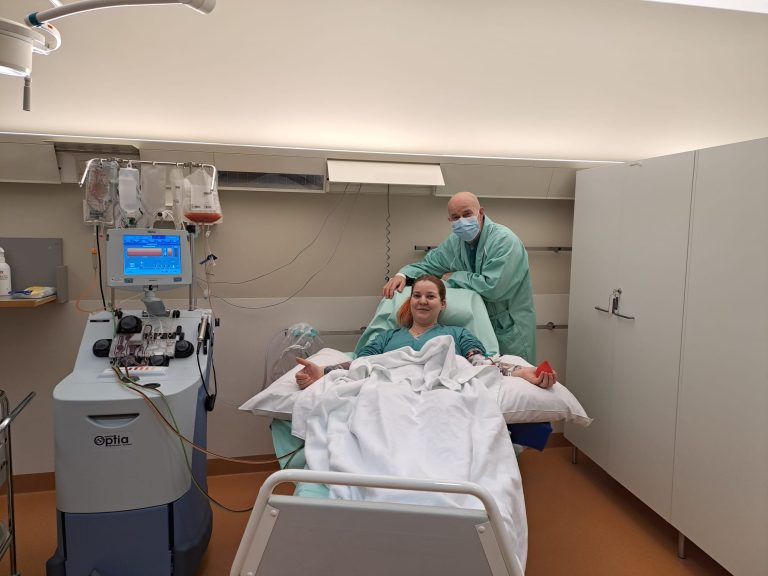
A stem cell transplant is a major procedure, but in Jenna’s case everything went well. She experienced only some nausea. The hardest part was the time spent on the hospital ward. Five weeks felt like a long time when all she could do was wait for her blood counts to return to normal levels. Because of the risk of infection, she was not allowed to leave the ward. She was not even allowed to open a window.
The hospital stay felt particularly difficult because Jenna had already spent the previous months at home due to the high risk of infection, as her white blood cell count had been at zero.
“Luckily, someone close to me came to visit every day. In the end, I started building Lego sets just to pass the time,” Jenna says.
Back to everyday life
A week before Jenna was discharged, it began to feel as though the hardest part was behind her. When she was finally allowed to go home, she felt both relieved and happy.
Today, Jenna is doing well. Her blood counts are monitored regularly, and she still has some restrictions. She has not yet returned to work, but everyday life is gradually beginning to feel like her own again.
“Life is starting to return to normal. I can go outside, see my friends and go and watch my partner’s ice hockey games,” Jenna says.
Her illness has also changed the way Jenna sees life.
“The fact that my life has depended on bags of blood has definitely changed me. I appreciate my health and the people close to me in a completely different way than I did before I became ill.”
Blood products have played an important role in Jenna’s journey towards recovery. Now she wants to thank all blood donors.
“I understand that giving blood can feel daunting and that some people are afraid of needles. But if you’re even considering donating blood, I really encourage you to do it. It could save someone’s life.”