
Psychosocial blood donation research
Psychological and sociological aspects of blood donation are also studied at FRCBS. In her PhD thesis Vera Raivola investigated what blood donors think about broader research use and biobanking of their blood. In interviews with blood donors, donation for research was viewed positively but different from donating to a patient. Enabling research was considered important, and participation in biobank research was seen as a new way to help—one that complements blood donation.
In a recent psychological study, we tested whether feeling of ownership of blood donation explains intention to donate. We hope to broaden our studies of psychosocial aspects of blood donation in the future. To this end the Blood Service Research Fund has funded the project “To donate or not to donate? –Exploration of donor motivation & multi-dimensional wellbeing” to study blood donation motivation among the general public.
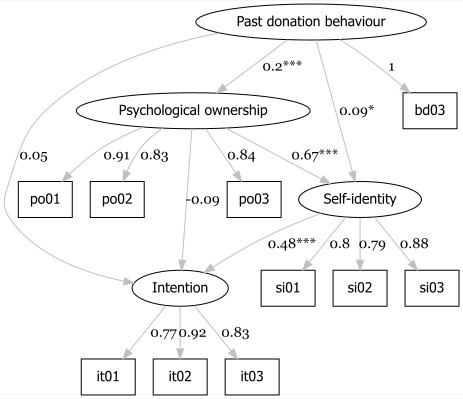
A structural equation model of intention of past donation behavior (past 2 years) acting on intention through psychological ownership and self-identity in Finnish donor sample (https://doi.org/10.23668/psycharchives.16311) repeating the findings of Edwards & al .2023 (https://doi.org/10.1111/vox.13479) from Australian blood donor population.