Blood donor health research
FRCBS is part of the FinnGen project project through the Blood Service Biobank. FinnGen combines electronic health registers and genome data to improve human health. Researchers at FRCBS use FinnGen data for blood donation research.
Data from the FinnGen project have been used to:
- describe how experienced blood donors differ from general population at genetic level (Clancy & al 2026)
- estimate the protective effect of blood donation for persons at highest genetic risk for hemochromatosis (Toivonen & al. 2026)
- describe the genetic background of iron deficiency anemia (Toivonen & al 2024)
- estimate the value of genetic data in predicting success of a donor’s future blood donation (Vinkenoog & al 2023)
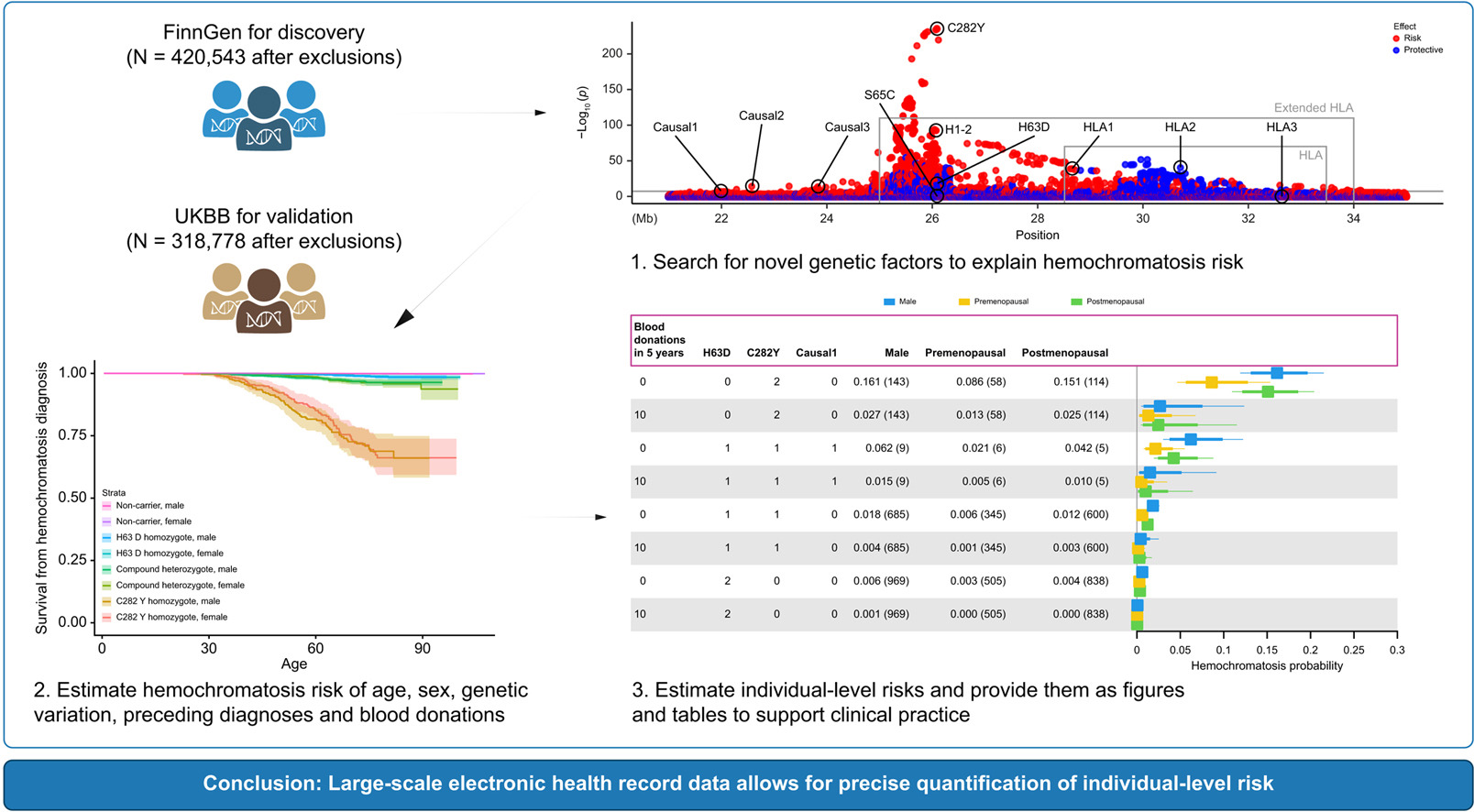
“Reprinted from JHEP Reports, Vol 8 Issue 4 , Jarkko Toivonen,Jonna Clancy,Fredrik Åberg,Jarmo Ritari,Mikko Arvas, “Quantifying risk modifiers of hereditary hemochromatosis using genomic and electronic health record data”, https://doi.org/10.1016/j.jhepr.2026.101774 ,Copyright (2026), with permission from Elsevier.”
Find out more of our previous donor health studies from these publications:
- Verenluovuttajat ovat muuta väestöä terveempiä – syy vai seuraus? (2025)
- Biobanking benefits donors and blood services (2025)
- Tutkimustieto rauta-arvoista ohjaa verenluovutuksen suosituksi (2024)
- FinDonor-tutkimus: Luovutusväli on merkittävin yksittäinen vaikuttaja verenluovuttajien rautavarastoihin (2019)
Last modified: 08.07.2026