Blood Service Research Fund awards 200 000 euros for research on blood donors’ sense of safety and serum eye drops
The Finnish Red Cross Blood Service Research Fund has awarded 100 000 euros in funding to a study led by Professor Anne Birgitta Pessi examining the significance of perceived safety in the donation of blood, organs and tissues. In addition, the research fund will provide 100 000 euros in funding for serum eye drop research during 2026.
The Blood Service Research Fund supports the research and development of the Blood Service’s current and future products and services. This year, the funding call was targeted at scientific research focusing on voluntary blood donation, tissue and organ donation, and changes affecting the Blood Service’s operating environment.
Does the feeling of safety influence the decision to donate?
Professor Anne Birgitta Pessi and her research group study the role of perceived safety in the emergence of willingness to donate. Even when a person is eligible to donate, well informed, and positively disposed towards donation, the decision to donate does not arise automatically.
“Donors are indispensable to Finnish healthcare. Nevertheless, only 3% of people of eligible age to donate blood give blood annually. Through this research, we hope to gain a better understanding of the factors that encourage or discourage people from participating in donation activities,” says Pia Siljander, Secretary of the Blood Service Research Fund and Research Director.
Research to examine the effectiveness and shelf life of serum eye drops
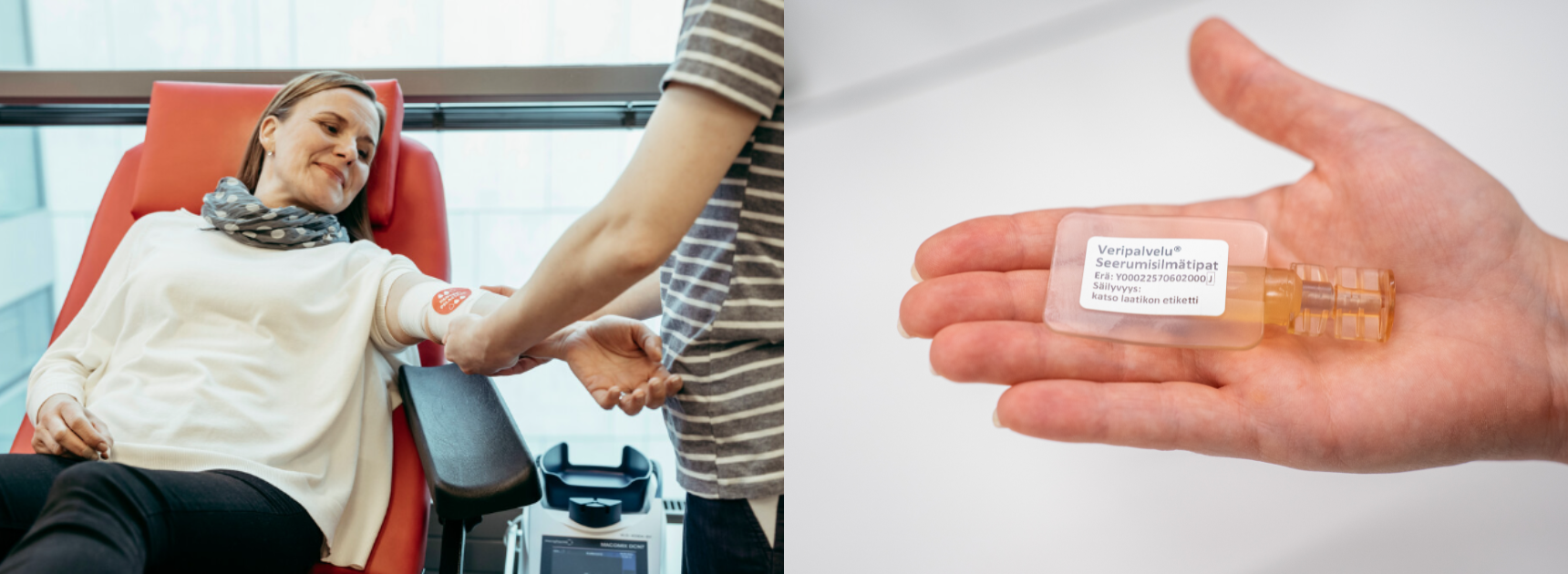
The research fund is also supporting research on allogeneic serum eye drops with €100,000 in funding for 2026. In 2025, the Blood Service began producing eye drops made from the serum of blood donors for the treatment of severe eye diseases.
The funding has enabled the establishment of a joint research consortium between the Blood Service, HUS Eye Hospital and the University of Helsinki. The consortium will investigate the effectiveness, usability and future development potential of serum eye drops.
“There is already a significant need for this product in the treatment of severe dry eye disease. Research on serum eye drops will enable their use to be optimised for an increasing number of patients,” says Jukka Moilanen, Chief Ophthalmologist at the University of Helsinki Eye Hospital.
The research will generate new knowledge about the product and its clinical use. At the same time, it will provide evidence required by the new EU Regulation on substances of human origin (SoHO) for products intended for patient use.
Further information:
Pia Siljander, pia.siljander@veripalvelu.fi, tel. +358 29 300 1294