
How are stem cells donated?
Stem cells can be collected in two ways: from the bloodstream in the arm crease or from the bone marrow.
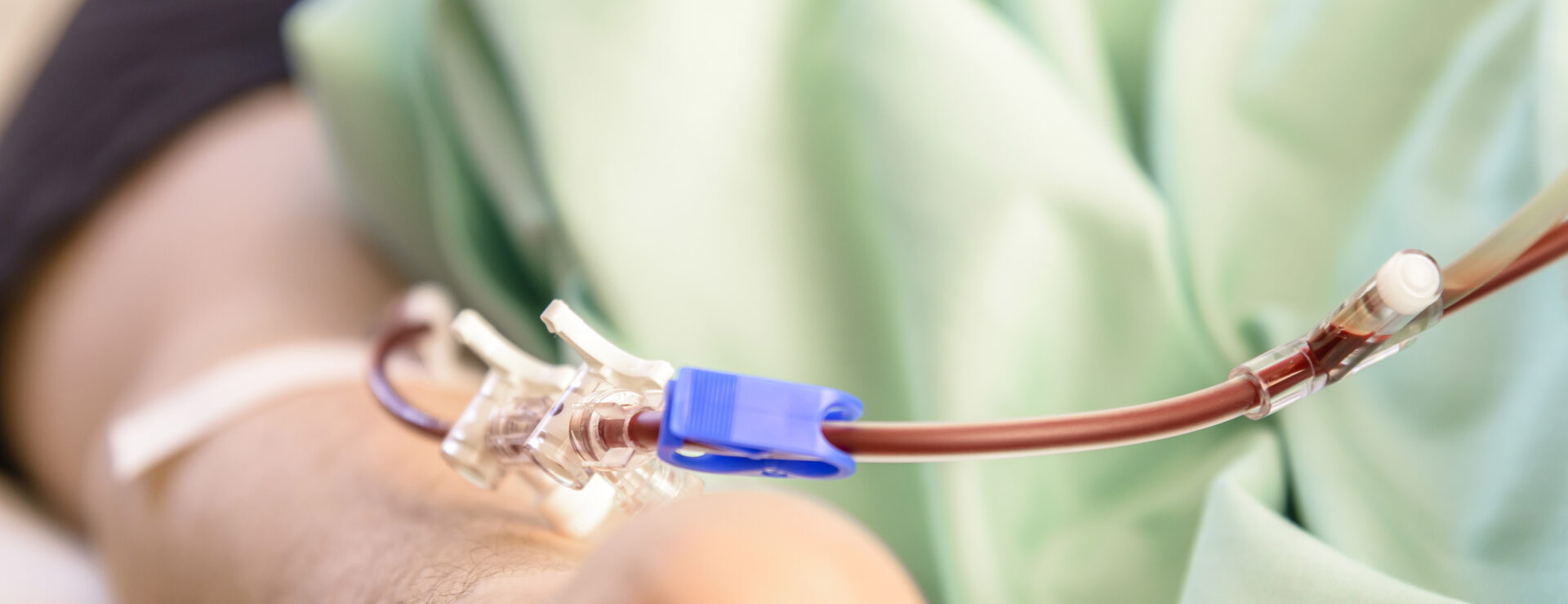
Collection of stem cells from the bloodstream
This is a considerably more common method. Stem cells can be collected from the donor’s arm vein in a way similar to a prolonged blood donation. Before collection, however, the stem cells must be mobilized from the bone marrow into the bloodstream. This is achieved through injections of growth factors.
Growth factor injections
A growth factor is a substance that normally exists in small amounts in the human body. The donor receives growth factor injections for 4–5 consecutive days at Meilahti Hospital. As a result of the growth factor injections, stem cells in the bone marrow multiply and start moving into the bloodstream.
Collection
Once the stem cells have moved into the bloodstream, the collection can begin. The collection is carried out through cannulas placed in the arm veins and takes about 5–6 hours.
The donor is on sick leave during the period of growth factor injections and the cell collection.
Collection of stem cells from bone marrow
Collection of stem cells from the bone marrow is performed under anesthesia at Meilahti Hospital. Bone marrow is aspirated with a needle in small portions from the iliac crest, located above the buttocks. A total of 300–1200 ml of bone marrow is collected, and the procedure takes a little over an hour.
The donor arrives at the hospital the day before the collection. Discharge is usually the day after the donation, and sick leave is granted for about one week.
Grafts collected from bone marrow are most often given to pediatric patients.
Blood Service reimburses the donor for travel and accommodation expenses, meals, and direct loss of income from their main occupation during the sick leave.
Last modified: 26.11.2025